MODULE 01 — FIELD OPERATIONS
Stop searching. The answers connected to the asset.
Every asset connected to its procedures, history, and what your crew knows, right in your hand in the field. The right information, right where you need it.
Your O&M information is everywhere and nowhere.
Operators check three or more systems before finding what they need. Procedures are buried in SharePoint, filed in binders, or locked in someone else's memory. When the answer takes 15 minutes to find, operators stop looking. And the training manuals describe the plant as designed, not as it actually works after 20 years of modifications, workarounds, and undocumented adjustments. New hires shadow senior operators for months because the written procedures don't reflect operational reality.
3+
Systems operators search before finding what they need
15 min
Average time to locate a procedure in the field
12-18 mo
Before a new operator can cover a shift independently
The one place an asset's full story comes together.
Your plant's truth is spread across separate systems and the crew's memory. OCore connects every asset to its complete, living record and puts it in the operator's hand, however they reach it. Here's how it comes together.
Every asset, connected to its living record
Procedures, history, specs, and what your operators capture day to day, all anchored to the equipment, not spread across systems. Reach it where you work: scan it, tap it on the map, or ask the co-agent.
Grounded today, evolved tomorrow
Standard operating procedures grounded in the equipment as it is now and evolved as it changes. Built on best practice, not outdated documentation.
Instant context, wherever you work
Everything relevant to an asset: procedures, past issues, parts, notes from the last crew. Right when you're standing in front of the equipment, and just as easily from anywhere else you work. It's there in seconds.
Smarter every shift
The manual is never finished. Every voice note and field observation surfaces automatically at the right asset, so the next shift starts smarter than the last. What one operator learns, the whole crew keeps.
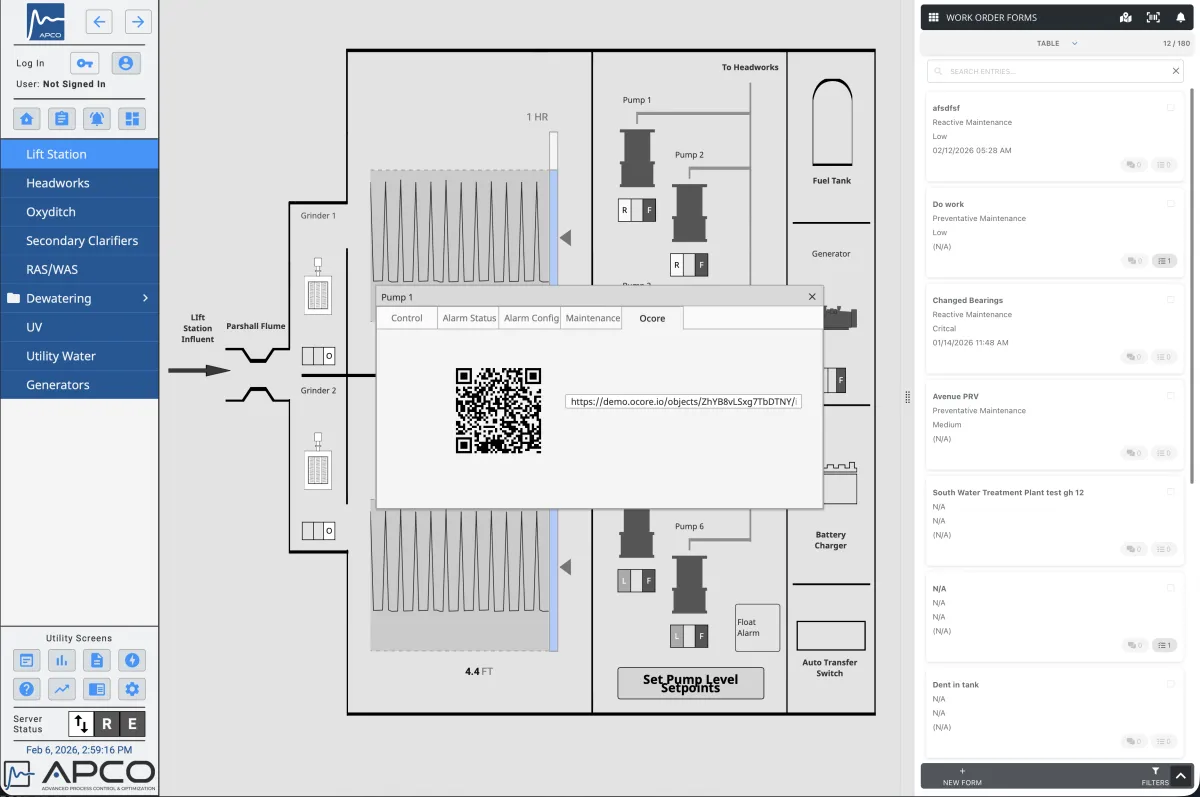
FIG. 01 — LIVING O&M MANUAL
What's in the module.
QR code scanning
Scan any asset for its full operational context on your phone.
Map navigation
Find assets, locations, and linear assets on an interactive map, with filters.
Operational history
The full timeline of an asset: readings, work, issues, and the operator notes around them. Captures the equipment and what the crew actually did.
Integrations: CMMS, GIS, SCADA
Pull in asset records (Cartegraph, Cityworks, Maximo), location and linear-asset data, and live SCADA readings from the systems you already run.
PDF manuals
Vendor docs, P&IDs, and drawings linked to each asset.
Vendor and parts info
Part numbers, vendor contacts, and specs at the asset.
The math is straightforward.
For a mid-size utility, the Living O&M Manual pays for itself through training time reduction and documentation search savings alone. Consider what your operators spend each week searching for procedures across multiple systems. Then consider what it costs when a new hire takes 12 to 18 months to work a shift independently because the written documentation doesn't reflect how your plant actually operates.
6-8 mo
For a new operator to cover a shift independently, down from 12-18
2k+
Hours saved searching for documentation (annual)
6-9x
Return on investment in year one
One shift of avoided search time per operator per week. New operator training time reduced from 18+ months to 6-8 months. Three weeks in, your new operator asks the agent a question and gets 20 years of collective experience back.
- AWWA/Water Research Foundation: New treatment plant operators at mid-size utilities require 12-18 months before operating shifts independently.
- AWWA, 2024 State of the Water Industry Report: 30-50% of the water industry workforce is eligible to retire this decade.
Start where it hurts most. Deploy one module or run them as one platform.
Request a demo